
What Happens When Students Are Given the Tools to Build Hope?
As Education Director for CAVU, one of the most inspiring parts of my work is seeing how much demand there is for hope, science-based learning, and real-world climate inspiration in classrooms around the world.
That demand makes sense. We are all living through the shared experience of a rapidly warming and changing planet, and we see what that means for our communities, our cultures, and our daily lives. But this moment is not only a challenge. It is also an opportunity to cultivate a spirit of hope, creativity, and innovation.
To me, that is exactly what the Climate Innovation Challenge sets out to accomplish.
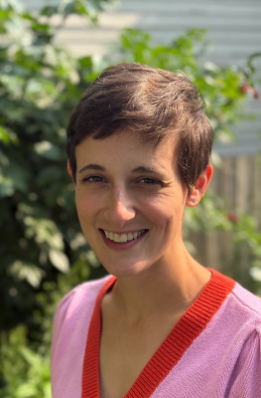
I also wear the hats of teacher and mom, and I see every day how creative young minds can be when they are given the tools, encouragement, and support to follow their curiosity. Students do not need to be convinced to care about the world around them. They need opportunities to ask questions, investigate problems, tell stories, and imagine solutions that feel meaningful to their own lives and communities.
This year’s CAVU Student Showcase was a powerful reminder of what happens when they are given that chance.
Through the Climate Innovation Challenge, students from around the world explored real climate challenges and turned their learning into action. In South Asia, where CAVU’s work continues to grow through strong educator and partner networks, students developed projects that connected climate change to culture, community, and local solutions. Project Tapari, this year’s CIC Founder’s Award winner from Nepal, and Impact of Climate Change on Culture and Heritage, an award-winning project also from Nepal, both showed how students can recognize the threats climate change and pollution pose to their communities while also drawing from the strength, knowledge, and identity of those same communities to respond.
That is what student agency looks like.
It is not just learning about climate change. It is learning how to understand a problem, connect it to lived experience, and ask: What can I do about it?
CAVU’s reach is continuing to grow. Today, the Climate Innovation Challenge is being brought into classrooms through dedicated teachers, school leaders, and partner organizations across the United States and around the world. In South Asia, the CIC has reached 88 schools across four countries, helping students build the skills, confidence, and imagination needed to become climate problem-solvers in their own communities.
We are also excited to share that CAVU has been invited to present our STEAM-based curriculum and student video challenge at upcoming education conferences across the United States. These opportunities allow us to share what we are learning from students and teachers, highlight successful classroom examples, and connect with more educators who are ready to bring climate innovation into their own schools.
CAVU will be presenting at:
NYC Green Schools Conference — New York, NY — September 23-24
North American Association for Environmental Education (NAAEE) Conference — Portland, OR — October 6-9
National Science Teaching Association (NSTA) Conference — Indianapolis, IN — November 4-7
If you are planning to attend any of these conferences and would like to connect with our education team, we would love to hear from you.
And to teachers and students: Climate Innovation Challenge registration for the 2026/27 school year has officially opened! Register here.
By registering, educators receive access to CAVU’s free curriculum, support from our education team, and the opportunity for students to submit their own climate solutions to the year-end CAVU Student Showcase for a chance to win cash prizes.
The next generation of climate innovators is already here. Our job is to help make sure they have the tools, support, and opportunities to lead.
Thank you for being part of the CAVU community and for helping us turn hope into solutions and action.

Building Climate Action Together:
As the Climate Innovation Challenge grows, CAVU is building partnerships with organizations that share a commitment to climate education
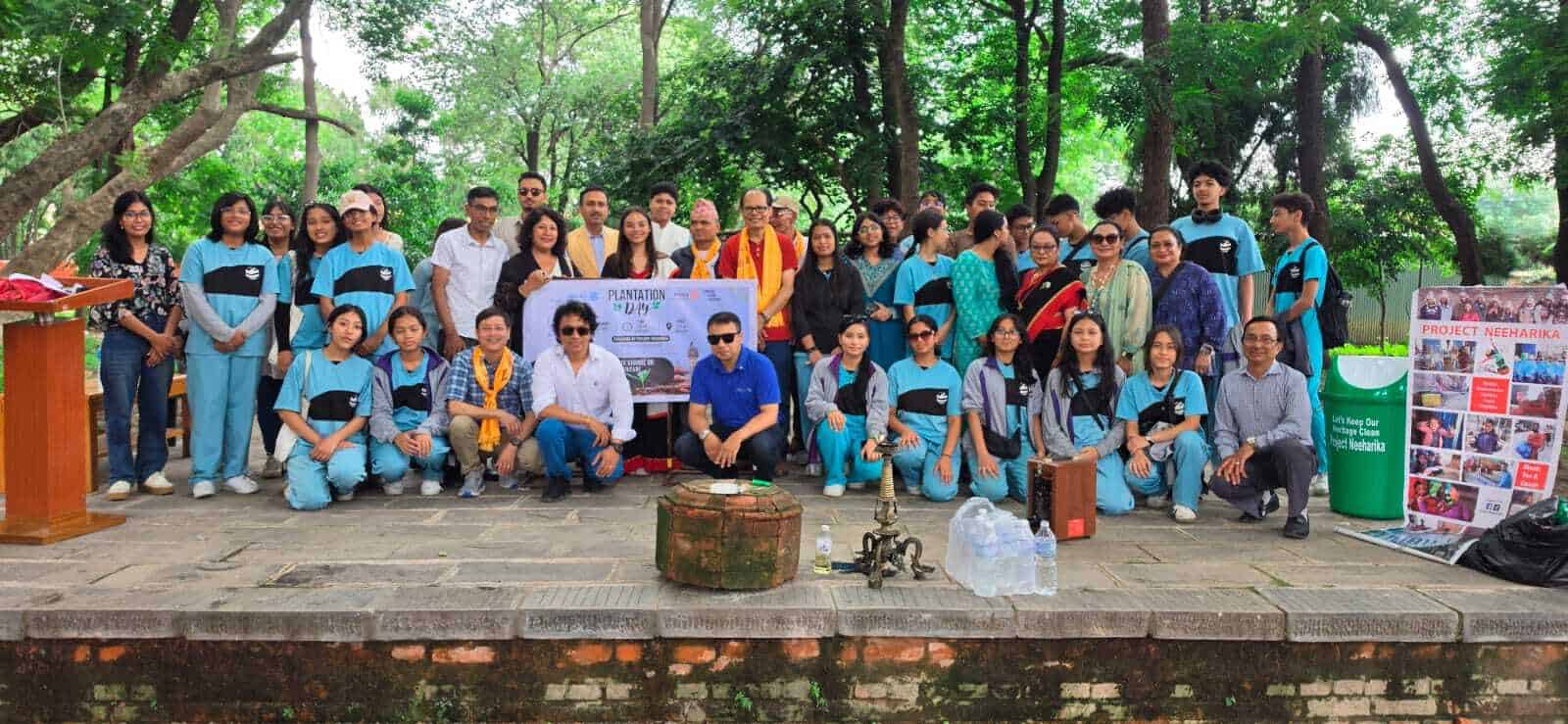
Educating the next generation of climate leaders is a big job and one that can’t be done alone.
As the Climate Innovation Challenge grows, CAVU is building and strengthening partnerships with organizations that share a commitment to climate education, student agency, and real-world learning. Through collaboration with partners such as EcoRise, The Climate Initiative, MassEnergize, NAAEE, Gaia Scholastic, SubjectToClimate, and the Institute for Humane Education, we are expanding the reach of climate learning and helping more teachers bring meaningful, solutions-focused education into their classrooms.
These relationships matter because young people need more than information about climate change. They need opportunities to understand what is happening in their communities, explore what they care about, and develop ideas that can make a difference. The Climate Innovation Challenge gives students that opportunity by combining science, storytelling, creativity, and action.
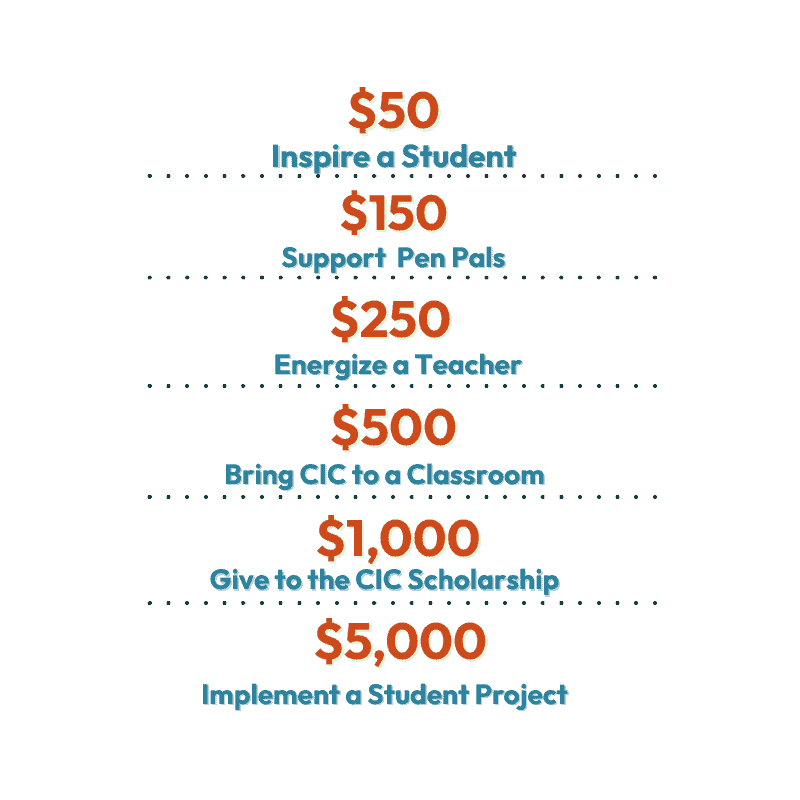
During this back-to-school season, CAVU is raising money to support the teachers and students taking on the Climate Innovation Challenge in classrooms around the world. Our goal is to raise $5,000 by September 19th, to help provide resources, support, and opportunities for students as they begin a new year of climate learning.
At a time when communities need awareness, education, solutions, and agency, CAVU is helping students see themselves as part of the answer. Every donation helps us support educators, expand access to the Climate Innovation Challenge, and celebrate the students who are turning concern into action.
Support the Back-to-School fundraiser and help the next generation of climate innovators get started.
Donate today at cavu.org/donate.

Dedicated to the student solutions that power a brighter future for our entire planet.
The Hotel That Has Critics Buzzing!
Bees and other pollinators are essential to our food supply and the health of ecosystems everywhere. They help sustain the fruits, vegetables, nuts, flowers, and habitats that communities depend on. But as our climate changes, pollinators are facing growing threats from disease, habitat loss, pesticides, parasites, and environmental stress.
A recent New York Times story highlights how the University of Georgia is training veterinary students to care for honeybee hives, recognizing bees as vital pollinators whose health is closely tied to agriculture and our food supply.
That same spirit of care and curiosity is alive in CAVU classrooms.
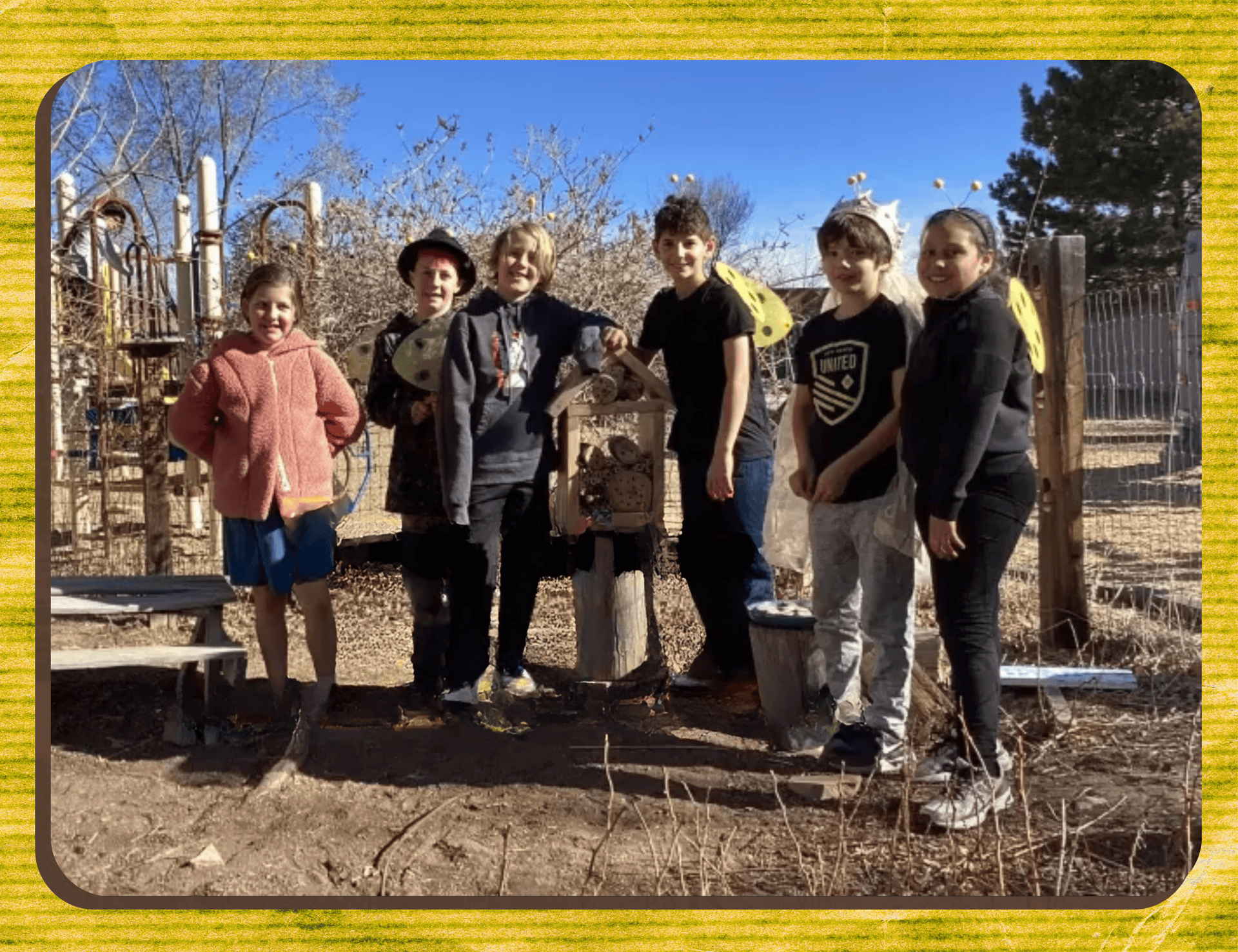
This year, fourth grade students in Mr. Smith’s class at Acequia Madre Elementary School in Santa Fe, New Mexico, created “Bee Hotel” through CAVU’s Climate Innovation Challenge. Students Soleil, Bryce, Noah, Felix, Zeek, and Ariella designed and demonstrated a simple way to give pollinators a safe place to rest, nest, and support the ecosystems around us.
Their project reminds us that climate solutions can begin with close observation, creativity, and a willingness to help.
Watch “Bee Hotel” and other student climate solutions on YouTube at @CAVUorg. Teachers and students can register for the next Climate Innovation Challenge at cavu.org/takethechallenge.
Those are exactly the kinds of questions students are exploring through CAVU’s Climate Innovation Challenge.
Watch Bee Hotel and discover more student-created climate solutions through CAVU’s Student Showcase.
Want the spotlight on your climate solution? Submit it to daniel@cavu.org

“The Real Gift is the Process”: A Conversation with Science Teacher Chris Chakeres
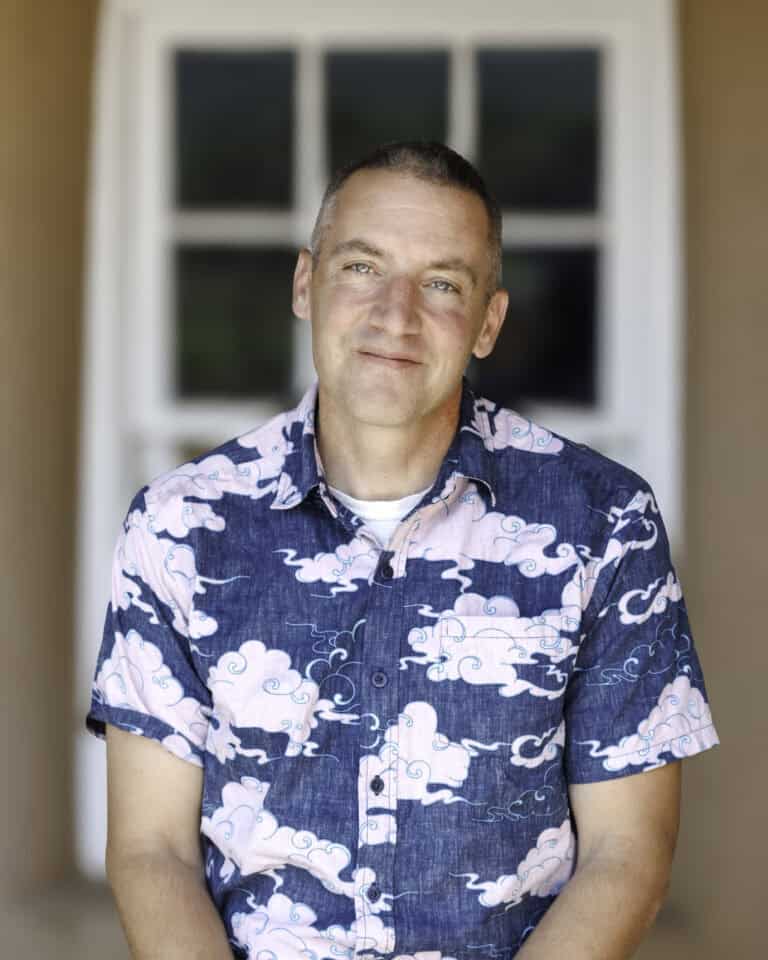
For seventh-grade science teacher, Chris Chakares, the Climate Innovation Challenge (CIC) has done more than compliment his lessons about the carbon cycle, it’s connected his students to the wider environment around them and their role within it.
In the United States, as summer break comes to a close, CAVU took an opportunity to sit down with Chris Chakares of Santa Fe Prep in New Mexico, to discuss with him how the Climate Innovation Challenge has been impacting his students and classes since he incorporated it into his lesson plan 3 years ago.
This interview has been edited for length and clarity.
CAVU: Can you introduce yourself and share how you first learned about the Climate Innovation Challenge?
Chris: My name is Chris Chakeres, and I teach seventh grade science at Santa Fe Prep in Santa Fe, New Mexico.
I first learned about the Climate Innovation Challenge from the teacher who taught science before I did, Robin Koval. At the time, I was head of the middle school, and Robin came to me and said there was this program she wanted her students to participate in. She was a really innovative and forward-thinking teacher, and my instinct was to let her run with it.
That first year, one of our students, Ben Becker, ended up winning the overall best video for his work on aquaponics. This was during the pandemic, so people were socially distanced and wearing masks, but we still had a little assembly ceremony on campus. Ben received a check, everyone cheered, and we watched his video. It was really cool.
A few years later, I became the science teacher and decided it was time to try the CIC myself. I had no background in filmmaking, but CAVU helped. Phil Lucero, who was directing the CIC at the time, came into my classroom and worked with students on their scripts and video production. We used Canva Pro, and it turned into a really great experience. A lot of the students got into the projects, and now my plan is to do it for a third year.
CAVU: What makes the Climate Innovation challenge stand out in your science class?
Chris: What I think is really cool about it is the ownership it gives kids and the efficacy it gives them to go out and make a change, even in a small way, in their own community.
Some students focus locally. They might get involved with a ski swap and try to encourage people to reuse ski gear. Other students think much more globally. A few years ago, one project explored cloud seeding and how policy could help support more snow in New Mexico.
The CIC really allows students to pursue their own interests in an authentic way. It gives them ownership over their relationship with nature and their relationship with what is happening with our climate. Agency is the word I keep coming back to. It gives them a lot of agency.
CAVU: How do you approach climate education with your seventh grade students?
Chris: One thing I really like about the program is that it does not push a political belief or ideology. The way it has been presented to me, and the way I try to present it to my students, is simple: we are all in the same boat here.
We have one Earth. This is our ship. How are we going to care for it? How are we going to take care of it? What can we do in our own lives?
For students who already have experience learning about climate change, they are able to go deeper. For students who are learning about it for the first time, it is a good introduction.
I also teach it alongside a unit on the carbon cycle. We are learning how carbon moves through the Earth and how we want to keep carbon in the ground and not in the atmosphere. It works really well with my curriculum.
“For me, the real gift is the process and the relationship that students get to form in the creative process.”
CAVU: Have you seen the Climate Innovation Challenge change students after the project ends?
Chris: Last year, I had a student come back to me and say, “Coach, the most important thing we did in your class last year was the CIC project.” She said she did not realize it at the time, but looking back, she felt it was the most important thing she did not only in science class, but in any of her classes. That was really cool to hear.
We also had a student who participated in the Challenge two years ago and then signed up to be a judge the following year. There are opportunities for students to find little ways to continue making a difference and growing their consciousness.
I also hear students talk about small habits they have changed, whether that is taking a shorter shower, turning the lights off, or making different choices because they have a greater awareness of our collective impact on the Earth.
Has teaching the CIC changed your own approach in the classroom?
Yes. It is changing how I think about what I want students to get out of the project.
The first year I taught the CIC, I had students each make individual videos. I was really happy with what they produced, and we were successful in the contest. But after watching some of the winning videos from this past year, I noticed that many of them involved students collaborating and doing something as a group.
That is leading me to change the way I teach it this coming year. We are going to do more group work, and I want to add a service component. I do not want students to only research something and share information about it. I want them to serve somehow in the name of our environment.
I like that the CIC is changing me as a teacher. It is getting me to think about what I really want students to take with them into the world.
Is there a student story that has stayed with you?
One student who comes to mind is Jade.
When I announced that we were going to do the Climate Innovation Challenge, I heard an audible groan from the front corner of the classroom. I asked her what was wrong, and she said she had a really awful experience with the CIC when she was in sixth grade.
As we talked, it became clear that she had felt an expectation to create this video, but she did not feel like she had the structure to actually move through the process and get the project done.
So I said, “Jade, just trust me. Let me take you through the process again this year, and at the end, I will ask you how it was.”
She was really into animals, so she chose to explore eco-friendly pet ownership. We went through the process, and at the end, I did not even have to ask her how it went. She came up to me and said, “Coach, that was so much better.”
She felt like she was able to bring her idea to life, instead of feeling like she had unfinished business from the previous year. I saw a real transformation in her attitude and in her sense of agency. She felt like she could do it if she set her mind to something.
That was a pretty special moment.
What do you hope students take away from the CIC experience?
For me, the real gift is the process and the relationship we get to form through the creative process.
Students come into it in different ways. Some are very competitive. Some are disappointed if the final product is not as perfect as they imagined. Some are just trying to see what happens. But the process gives them a chance to work through an idea, make decisions, create something, and build a relationship with the world around them.
I am grateful for the Climate Innovation Challenge and the opportunity it gives my students. I think it is important work, and I am glad we will have a chance to do it again this year.
Bring the Climate Innovation Challenge to Your Classroom
The Climate Innovation Challenge helps students explore real environmental challenges, connect science to their own lives, and create solutions through storytelling and action.
Teachers and students can learn more and register for the next Climate Innovation Challenge at cavu.org/takethechallenge.

Hi, I'm Daniel
New Mexico
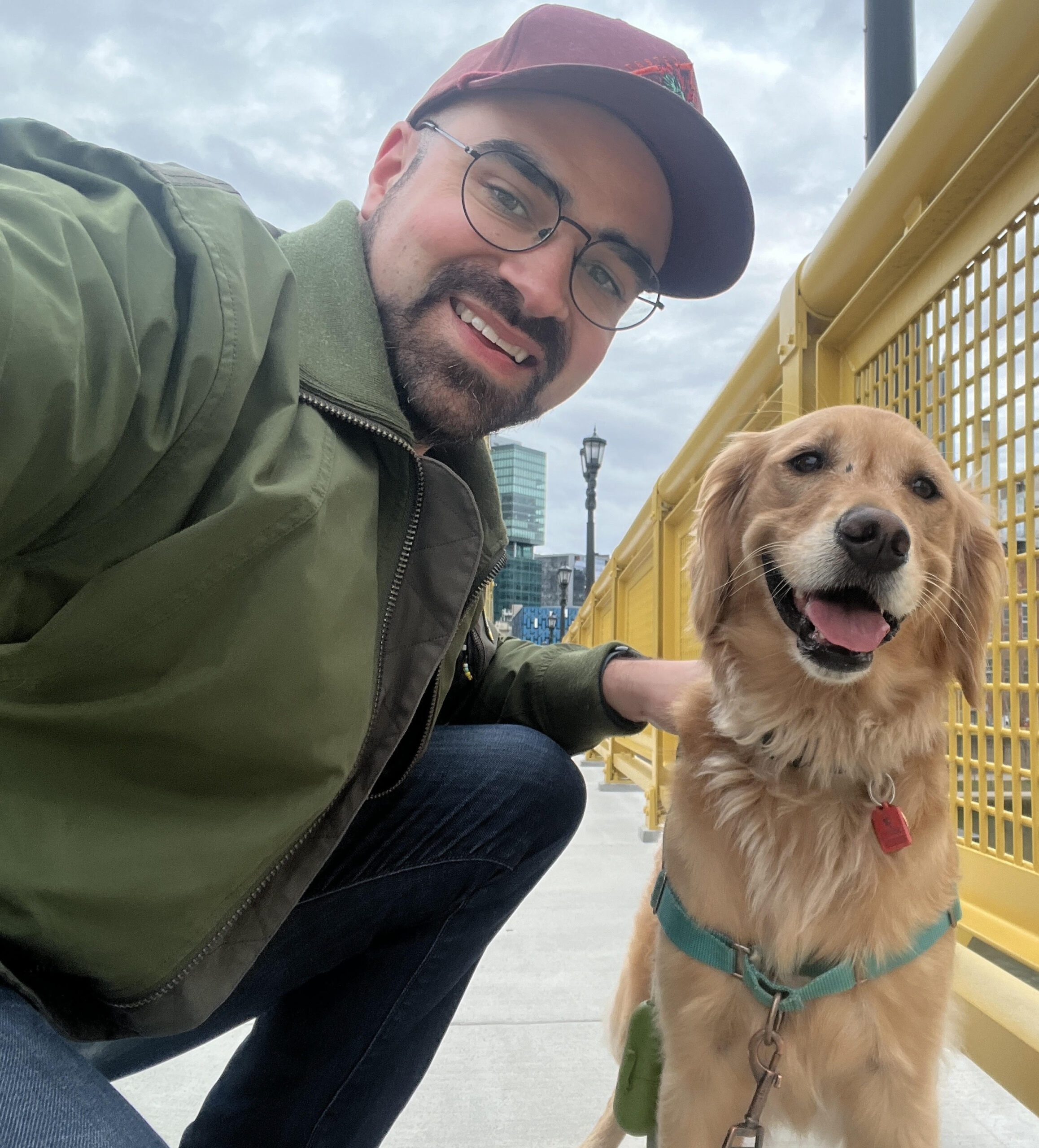
Dan Marzec is a dynamic and creative communications professional with over a decade of experience leading teams and crafting messaging. A passionate storyteller with a strong record of leadership, collaboration, and coordination, he thrives on turning complex topics into clear, engaging content that reaches and inspires wide audiences.
View Full ProfileDaniel's Recent Updates
View All Updates from DanielMore Posts You Might Like
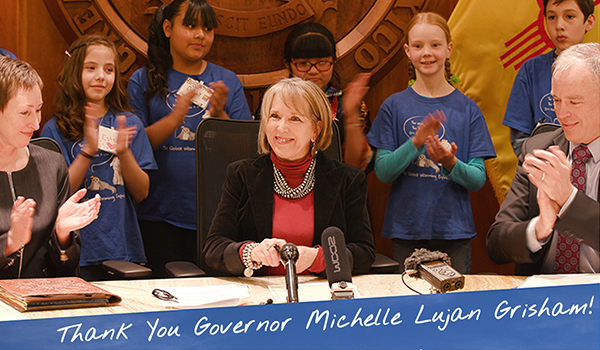
And just like that, we’re getting to work on climate!
In an exciting stroke of the pen, Governor Michelle Lujan Grisham announced this week that New Mexico will join the U.S. Climate Alliance, adding New…
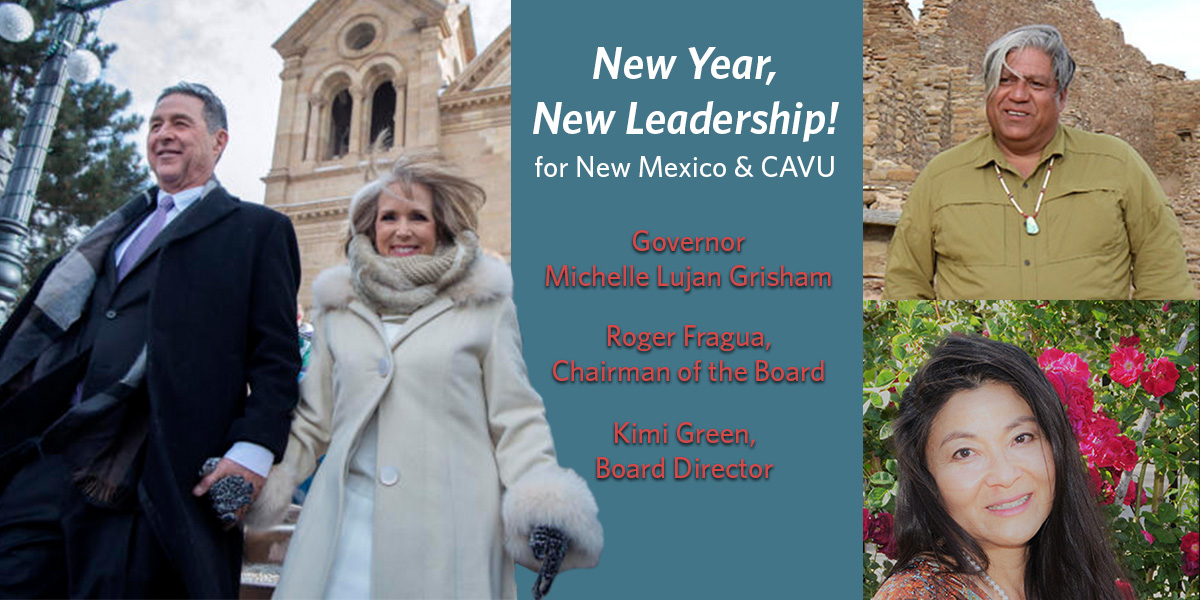
CAVU Adds New Leadership in 2019
“With new leadership in the state house, comes new opportunity to makes real gains for our state,” said CAVU’s Executive Director, Jordan Vaughan Smith. “In…
Methane is a Hot Issue in New Mexico
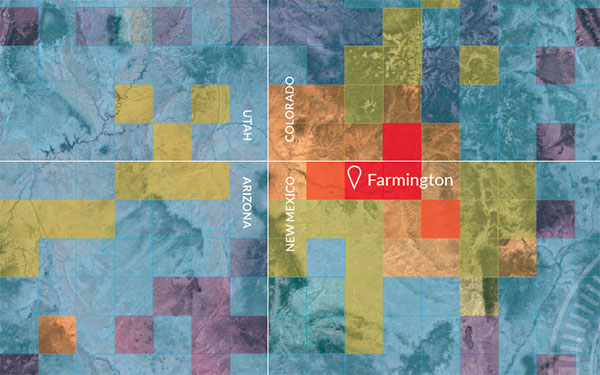
CAVU and the Rio Grande Chapter of the Sierra Club recently created a successful partnership conducting overflights and producing a short video highlighting major areas of pollution…

Unearthed Launch Event
CAVU is set to launch Unearthed: Exploring Oil & Gas Issues in New Mexico at the Lensic Performing Arts Center in Santa Fe on Thursday, November…